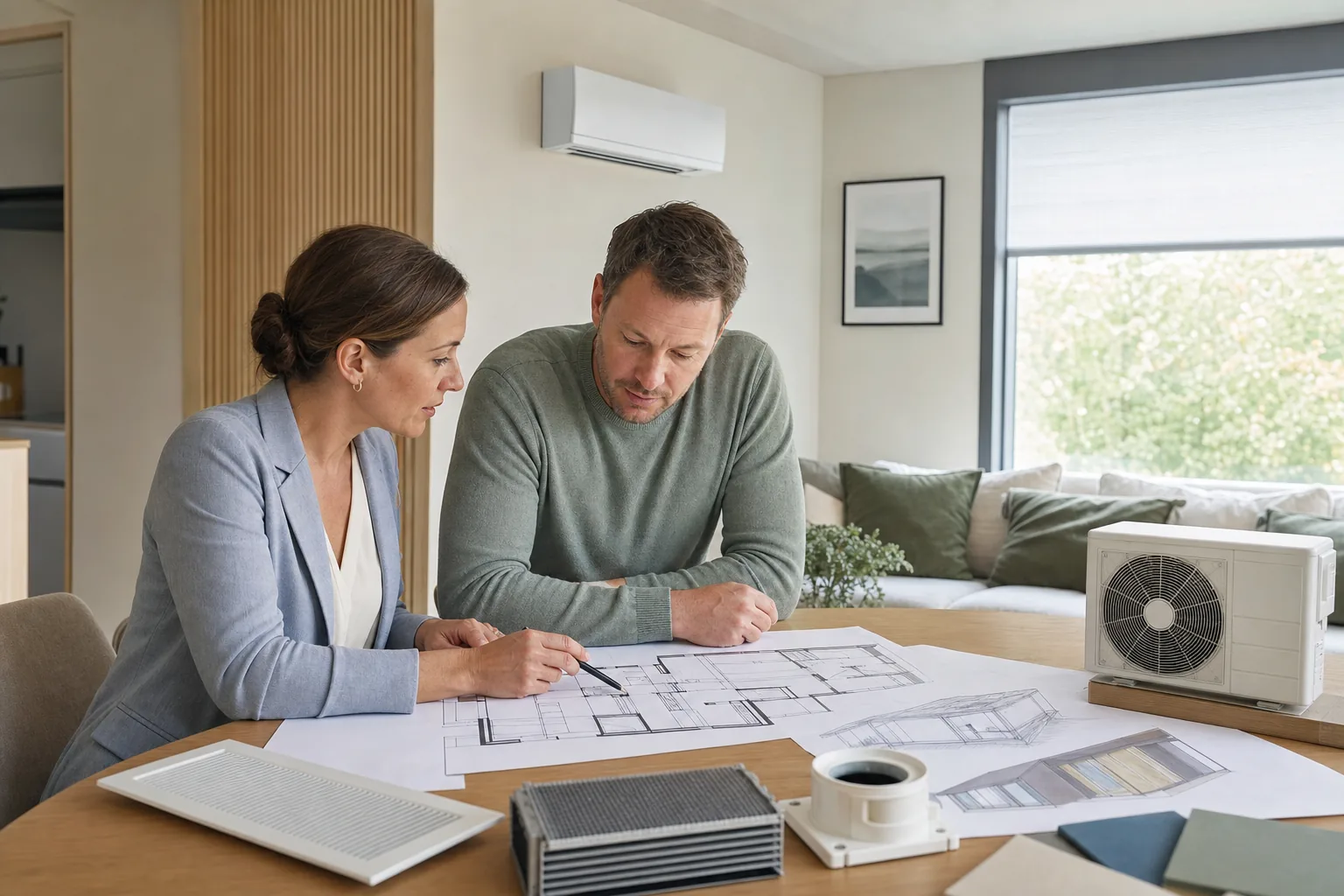
Sí, se pueden instalar placas solares en una casa prefabricada, pero la compatibilidad no depende de que la vivienda sea modular o tradicional. Depende de la capacidad resistente de la cubierta, el sistema de anclaje, la impermeabilización, el viento y la nieve de la zona, las sombras, el consumo eléctrico y la documentación del fabricante. La decisión correcta empieza con un estudio técnico, no con el número de paneles de un kit.
Esta guía explica qué revisar en España antes de pedir presupuestos, cómo elegir entre autoconsumo con o sin batería y qué trabajos deben quedar en manos de profesionales. No ofrece cifras universales de ahorro ni de amortización: cambian con el perfil horario de consumo, la tarifa, la radiación, la potencia instalada y la compensación de excedentes.
¿Una casa prefabricada admite placas solares?
En muchos casos, sí. Una vivienda de hormigón modular, entramado ligero, acero, madera o panel sándwich puede integrar fotovoltaica si la estructura y los encuentros se han diseñado o verificado para ello. El problema no suele ser el concepto de casa prefabricada, sino asumir que cualquier cubierta admite la carga añadida, las acciones del viento y las perforaciones del sistema de montaje.
La guía pública del IDAE para convertirse en autoconsumidor recomienda empezar por el espacio disponible, la orientación y el recurso solar, y acudir a una empresa especializada para los pasos técnicos y administrativos. En una vivienda prefabricada hay que añadir una comprobación expresa del fabricante o de un técnico competente sobre estructura, anclajes y garantía.
Cinco comprobaciones antes de colocar paneles
1. Capacidad de carga y acciones de viento o nieve
Los módulos, las estructuras, los lastres y las cargas durante el montaje añaden peso. El viento puede generar succión y la nieve suma una carga variable. No basta con dividir kilos entre metros cuadrados: un anclaje transmite esfuerzos a puntos concretos y una cubierta ligera puede ser sensible a cargas puntuales.
Pide al fabricante de la vivienda la composición de la cubierta, los puntos resistentes y las cargas admisibles. Si falta esa información o la casa ya está construida, encarga una comprobación a un técnico competente. El Código Técnico de la Edificación, Documentos Básicos de Seguridad Estructural, es la referencia normativa para las acciones y verificaciones del edificio.
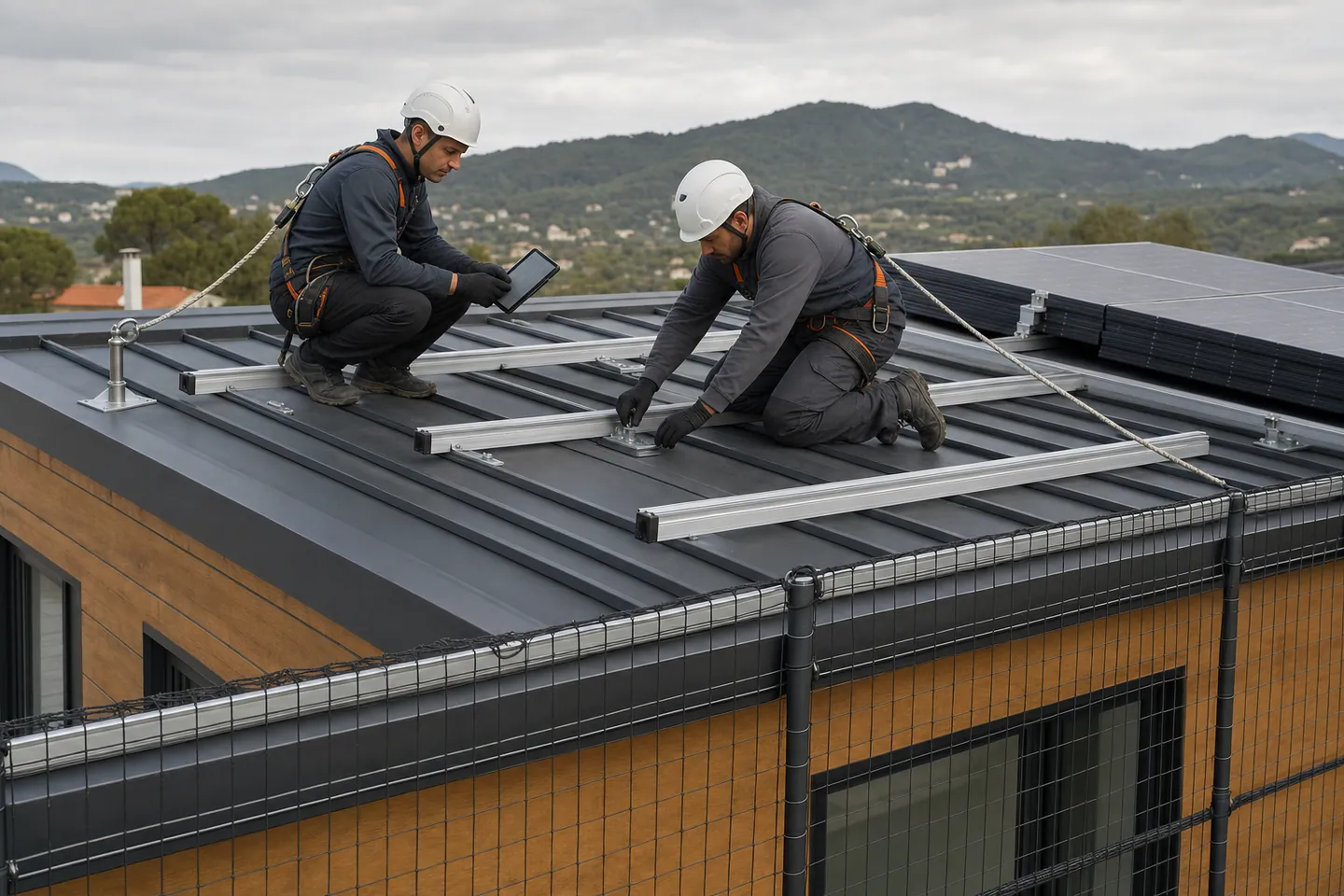
2. Impermeabilización y puentes térmicos
Una fijación mal resuelta puede perforar la lámina impermeable, comprimir el aislamiento o crear un puente térmico. En panel sándwich y cubiertas metálicas es especialmente importante usar el sistema previsto para el perfil y sellar conforme a las instrucciones del fabricante. En una cubierta plana, los lastres evitan algunas perforaciones, pero añaden peso y deben comprobarse frente al viento.
Solicita un detalle constructivo del anclaje: soporte resistente, tornillería, juntas, sellado, separación respecto a bordes y pasos de cable. Conserva fotografías antes de cubrir los encuentros. La guía de mantenimiento de una casa prefabricada explica por qué las juntas y el agua requieren seguimiento periódico.
3. Superficie útil, orientación y sombras
La mejor orientación no compensa una cubierta pequeña, sombreada o llena de obstáculos. Chimeneas, lucernarios, petos, árboles y edificios cercanos reducen superficie y pueden producir sombras en distintas horas y estaciones. Un estudio debe representar el recorrido solar y reservar pasillos de mantenimiento y distancias de seguridad.
La orientación sur suele favorecer la producción anual en España, pero este u oeste pueden encajar mejor con consumos de mañana y tarde. No descartes una solución por no tener el tejado perfecto: el objetivo es ajustar producción y consumo, no perseguir una cifra máxima aislada.
4. Instalación eléctrica, inversor y protecciones
El proyecto debe definir dónde irán inversor, protecciones, canalizaciones y, si existe, batería. Estos equipos necesitan condiciones de temperatura, ventilación, accesibilidad y separación que marca cada fabricante. El cableado no debe quedar atrapado en juntas móviles, expuesto a bordes cortantes ni apoyado sobre la cubierta.
Seguridad: no conectes paneles, inversores ni baterías por tu cuenta. Los paneles generan tensión cuando reciben luz, incluso con el cuadro de la vivienda desconectado. La instalación, verificación y puesta en servicio corresponden a una empresa instaladora habilitada y deben cumplir el Reglamento Electrotécnico para Baja Tensión.
5. Garantía de la vivienda y acceso para mantenimiento
Antes de firmar, consulta por escrito cómo afecta la intervención a las garantías de cubierta, estanqueidad y estructura. Define también quién responde si aparece una filtración: fabricante de la casa, empresa solar o instalador de la cubierta. Debe quedar espacio para revisar fijaciones, limpiar cuando sea necesario y sustituir equipos sin desmontar media envolvente.
Autoconsumo con red, batería o instalación aislada
| Sistema | Ventaja principal | Limitación | Cuándo tiene sentido |
|---|---|---|---|
| Conectado a red sin batería | Menor complejidad y uso directo de la energía diurna | Por la noche depende de la red; los excedentes se compensan según contrato | Viviendas ocupadas de día o con consumos programables |
| Conectado a red con batería | Desplaza parte de la energía solar a la tarde y noche | Más coste, espacio, gestión térmica y mantenimiento | Cuando existe consumo nocturno suficiente y el análisis económico lo justifica |
| Aislado | Puede suministrar una vivienda sin red cercana | Exige más almacenamiento, control de cargas y respaldo | Parcelas donde la conexión no existe o resulta inviable |
El Real Decreto 244/2019 regula las modalidades administrativas, técnicas y económicas del autoconsumo eléctrico. El texto consolidado debe leerse junto con la normativa autonómica y municipal aplicable. Una empresa instaladora puede tramitar el registro y la comunicación con distribuidora y comercializadora según el caso.
Cómo dimensionar sin comprar paneles de más
Reúne doce meses de consumo y mira las horas
La suma anual es útil, pero no suficiente. Dos viviendas que consumen lo mismo pueden necesitar soluciones distintas si una usa electricidad a mediodía y otra concentra climatización, cocina y recarga por la noche. Reúne facturas y, cuando sea posible, descarga la curva horaria del distribuidor.
Incluye los cambios previstos
Una bomba de calor, un termo, un vehículo eléctrico o una ampliación modular cambian la demanda. La guía de climatización de una casa prefabricada muestra cómo aislamiento, ventilación y equipos afectan al consumo. Antes de sobredimensionar paneles, suele ser sensato reducir pérdidas y programar cargas flexibles en horas solares.
Compara escenarios, no una única promesa de ahorro
Pide al menos tres escenarios: sistema base sin batería, sistema con batería y, si procede, una potencia alternativa. Cada propuesta debería indicar producción mensual estimada, autoconsumo directo, excedentes, degradación prevista, supuestos de tarifa y resultado con sombras. Desconfía de una amortización exacta que no muestre hipótesis.
Permisos, legalización y ayudas en España
Los trámites cambian según potencia, modalidad, comunidad autónoma y ayuntamiento. Pueden intervenir memoria o proyecto, licencia o comunicación de obras, certificado de instalación eléctrica, inspección cuando corresponda, registro autonómico, distribuidora y contrato de compensación de excedentes. La guía profesional de tramitación del IDAE reúne los pasos y procedimientos autonómicos.
No cuentes una ayuda o deducción como segura hasta revisar convocatoria, fecha, presupuesto disponible y requisitos. Algunas exigen solicitar antes de empezar; otras piden certificados energéticos o justificantes específicos. Pide que el presupuesto separe el coste subvencionable y que identifique quién realiza la gestión, sin basar la decisión únicamente en una ayuda futura.
Lista de comprobación para comparar presupuestos
- Consumo anual y curva horaria utilizados en el cálculo.
- Estudio de sombras y producción mensual, con herramienta y supuestos identificados.
- Informe de compatibilidad estructural o confirmación escrita del fabricante de la vivienda.
- Plano de paneles, pasillos, anclajes, canalizaciones, inversor, protecciones y batería.
- Detalle de impermeabilización y responsabilidad frente a filtraciones.
- Marca, modelo, fichas técnicas y garantías de módulos, inversor, estructura y almacenamiento.
- Alcance de permisos, legalización, puesta en marcha y alta de compensación.
- Monitorización, mantenimiento, asistencia y condiciones de garantía de instalación.
- Retirada o desmontaje necesario para reparar la cubierta en el futuro.
Una oferta clara permite comparar soluciones aunque usen equipos diferentes. Evita decidir por el número de paneles o por una potencia pico sin contexto: lo útil es cuánta energía podrás aprovechar de forma segura y durante cuánto tiempo.
Preguntas frecuentes
¿Cuántas placas necesita una casa prefabricada?
No existe una cifra universal. Se calcula con consumo horario, ubicación, sombras, orientación, superficie, potencia de cada módulo y objetivo de autoconsumo. El tamaño de la vivienda por sí solo no basta.
¿Se pueden instalar sobre panel sándwich?
Sí, cuando el perfil, la estructura y el fabricante admiten el sistema de fijación. No debe atornillarse solo a la chapa exterior ni improvisarse el sellado. Pide un detalle específico y la confirmación de cargas y garantía.
¿Compensa añadir batería?
Depende del consumo nocturno, la compensación de excedentes, el coste total, la vida útil y el espacio disponible. Primero compara el autoconsumo directo y la programación de cargas; después valora la batería con un escenario separado.
¿Puedo instalar yo un kit solar?
No es recomendable en una vivienda. Hay riesgo eléctrico y de caída, además de requisitos estructurales, de protección, certificación y legalización. Encarga el trabajo a profesionales habilitados y no accedas a la cubierta sin medios y formación adecuados.
¿Las placas afectan a la garantía de la casa?
Pueden afectarla si se perfora o modifica la cubierta fuera del sistema autorizado. Solicita aprobación escrita del fabricante y coordina responsabilidades antes de la obra.
Conclusión: primero estructura y consumo, después paneles
Una casa prefabricada puede aprovechar bien la energía solar cuando el proyecto une estructura, estanqueidad, electricidad y hábitos de consumo. Verifica cargas y anclajes, estudia sombras y curva horaria, compara sistemas con y sin batería y exige que permisos, garantías y mantenimiento queden por escrito.
La fotovoltaica no debe tratarse como un accesorio colocado al final. Si la vivienda está en fase de diseño, integrar desde el principio orientación, pasos de cable, ubicación de equipos y accesos reduce riesgos. Si ya existe, una revisión técnica previa protege la cubierta y evita que una promesa de ahorro termine en una reparación costosa.