
A bedroom humidity reading can rise overnight even when no leak is visible. The number may reflect moisture from occupants, less air movement, and a drop in temperature rather than a single hidden defect. The useful response is to measure a pattern, not react to one peak.
Why relative humidity can climb at night
- People and pets add moisture: breathing and normal household activity release water vapor.
- The room cools: relative humidity rises when air temperature falls, even if the actual amount of water vapor changes little.
- Airflow drops: closed doors, blocked returns, or a system that cycles less can isolate the room.
- Outdoor air changes: opening a window is not automatically drying when outdoor air is warm and humid.
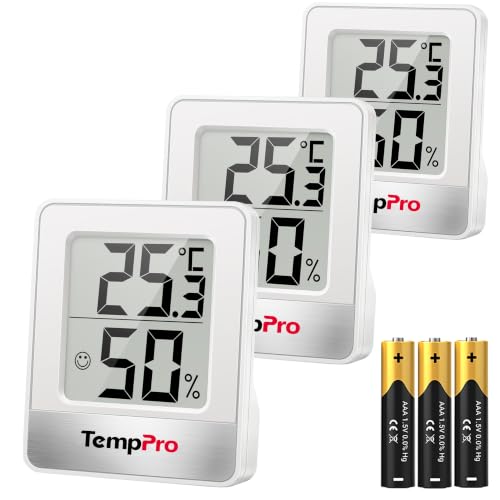
- Para un clima interior saludable: Con este mini termohigrómetro de ambiente, puede conocer fácilmente la temperatura y h…
- Sensor avanzado de alta precisión: El termómetro higrómetro para hogar construido en un sensor de temperatura y humedad …
- Ahorro de energía y opciones de montaje múltiple: Este monitor de temperatura y humedad en el hogar funciona con 1 bater…
As an Amazon Associate, we may earn from qualifying purchases at no additional cost to you.
A simple three-night check
1. Use two sensors
Place one hygrometer in the bedroom, away from a window, supply register, exterior wall, humidifier, and direct sunlight. Put the second in a nearby hall or room. Our guide to hygrometer placement explains why a nightstand beside a cold window can mislead you.
2. Record temperature and humidity together
Write down both readings at bedtime, on waking, and an hour after the door opens. A rise that follows a temperature drop is different from a reading that remains high all day. Before trusting a large difference between devices, compare your hygrometers side by side.

3. Change one variable
On the second or third night, leave the bedroom door slightly more open if privacy and fire-safety practices allow, and make sure the HVAC return path is not blocked. Do not change thermostat settings, run a portable unit, and open windows all at once; you will not know what mattered.
When the pattern points beyond normal occupancy
Investigate further when the bedroom stays much wetter than nearby rooms, condensation persists on several surfaces, materials feel damp, or a musty odor returns after cleaning. In a manufactured home, pay attention to plumbing penetrations, window seals, roof or wall damage, bathroom exhaust, and the underbelly. Do not open electrical panels or enclosed cavities as a casual DIY test.
Safer ways to respond
- Keep supply and return grilles clear.
- Use the bathroom exhaust fan during and after showers.
- Dry visible window moisture and track whether it returns.
- If a dehumidifier is needed, follow its clearance, drainage, filter, and electrical instructions; see our dehumidifier placement guide.
- Keep cords, condensate hoses, and chemicals away from children and pets.
FAQ
Does a high morning reading prove there is a leak?
No. It is a reason to compare rooms, temperature, duration, and visible signs. A persistent localized pattern deserves inspection.
Should I sleep with a window open?
Only when outdoor conditions, security, weather, and your HVAC setup make that appropriate. Outdoor air can add moisture rather than remove it.