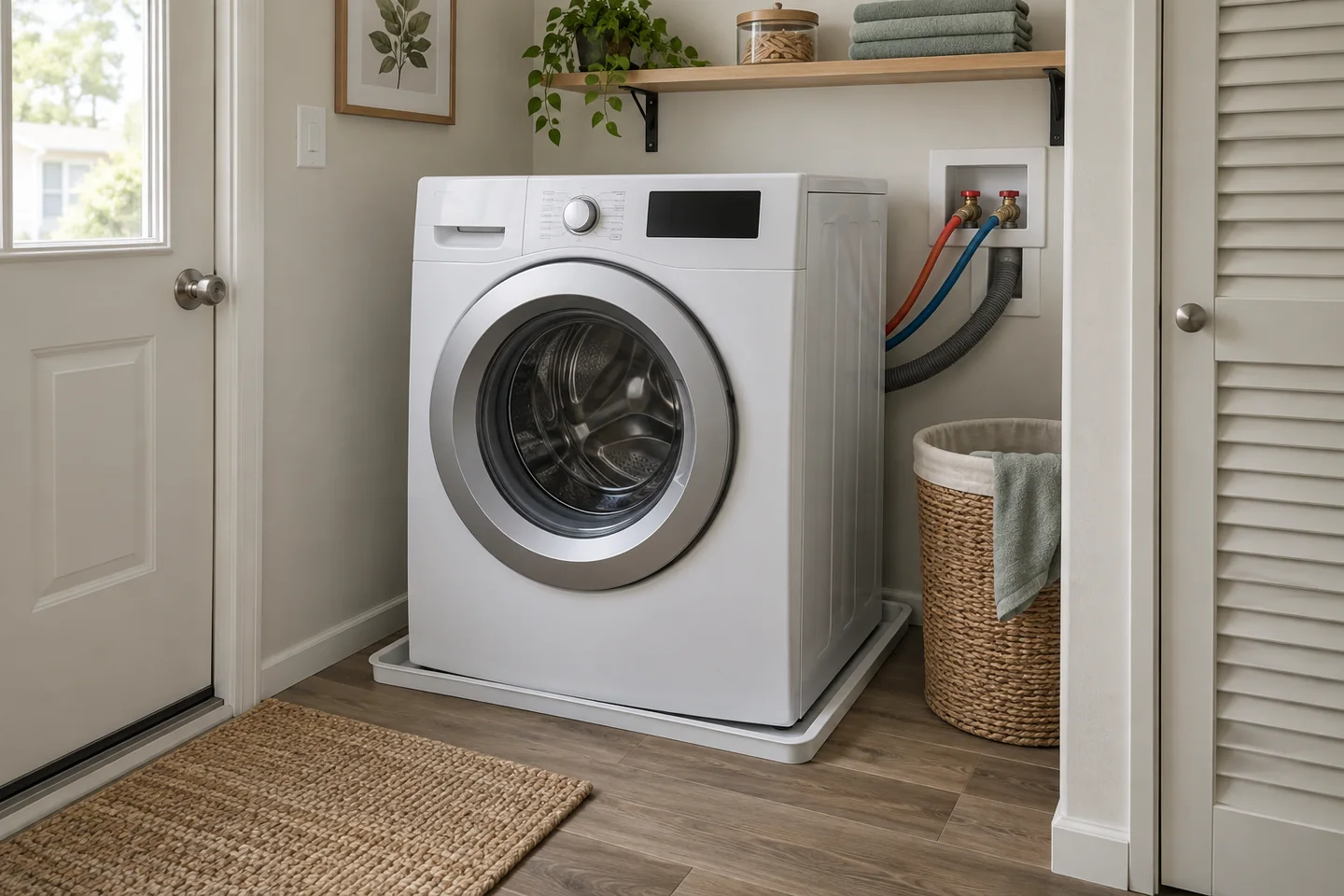
A washing machine drain pan can contain a small leak and direct water toward a suitable drain, but it is not a repair for a loose hose, failed valve, overflowing standpipe, or damaged floor. In a manufactured home, the useful question is not simply whether a pan fits under the appliance. You also need access, a safe drain route, adequate floor support, and enough clearance to service the washer.
Transparency: this article includes an Amazon product card. If you buy through it, the site may earn a commission at no extra cost to you.
When a drain pan helps
A pan is most useful for slow drips from the appliance body or supply connections. A pan with a correctly installed outlet can move that water away from finished flooring. It may also make a minor leak easier to notice. It cannot handle every sudden hose failure, and a pan without a drain can overflow.
If you are still locating the source, start with the manufactured-home leak detector placement guide. For moisture that appears without an active leak, compare the pattern with the guide to laundry-room humidity.
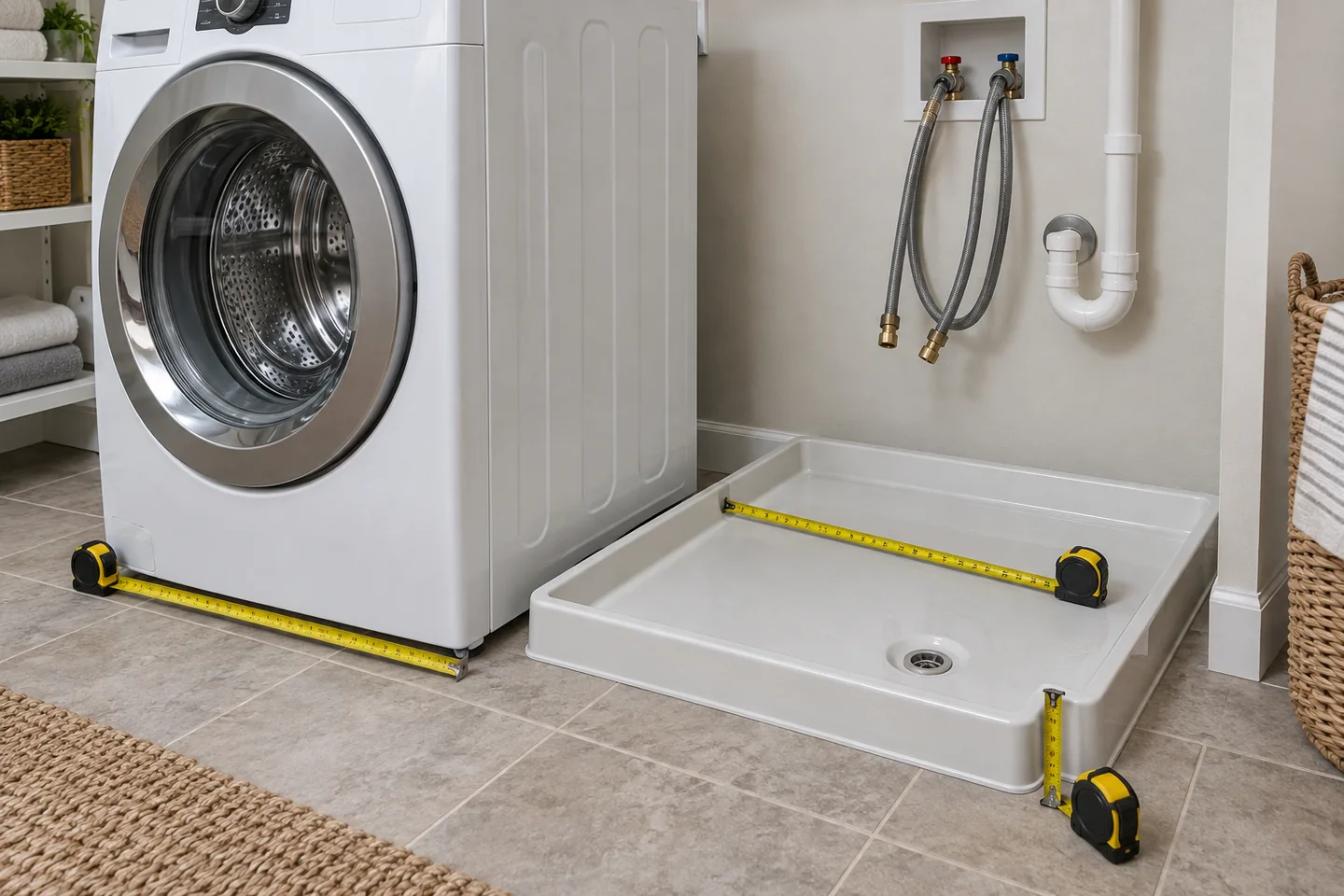
Measure the washer and the route
- Measure the appliance width and depth at the feet, not only at the cabinet.
- Record hose, cord, door, and filter-access clearances.
- Check the pan’s inside dimensions; outside dimensions alone can be misleading.
- Plan how the washer will be lifted without bending the pan or damaging flooring.
- Identify where the pan outlet would discharge and whether local rules allow that route.
Leave enough room to close closet doors and remove service panels. For a front-load washer, confirm that the pan lip will not block the lower access door. A shallow lip is easier to cross but holds less water; a taller lip can interfere with servicing.
Drain connection versus catch-only pan
A catch-only pan buys time but requires regular inspection. A drained pan needs a compatible fitting, a continuous route with appropriate fall, and a safe termination. Do not connect it casually to the washer standpipe, cut the floor, or alter plumbing without checking the appliance instructions and local requirements. Manufactured-home plumbing can differ in routing and access from site-built construction.
This Old House’s drain-pan overview covers common plastic and metal pans, outlets, installation, and maintenance. Treat it as general information; the manufacturer, local code authority, and a qualified plumber should decide the actual connection.
One pan to compare against your measurements
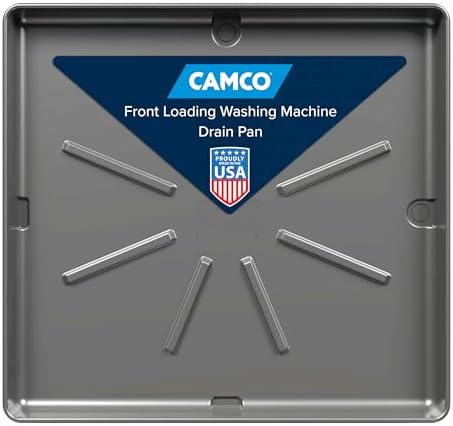
The product card below was returned today by the authorized catalog selector. The title identifies a Camco washing-machine drain pan with a PVC fitting. Confirm the current inside dimensions, outlet size, material limits, and installation instructions on the live listing before purchase. This is not a field-tested recommendation.
Installation and safety checklist
- Shut off water and disconnect power according to the washer manual before moving it.
- Use enough people or proper lifting equipment; washers are heavy and awkward.
- Do not crush the drain hose, supply hoses, wiring, or under-floor services.
- Keep the washer level and verify that every foot rests securely.
- Run a supervised fill, drain, and spin cycle, then inspect every connection.
- Recheck after 24 hours and after the first week.
Water and electricity are a hazardous combination. Stop if you find damaged wiring, a warm outlet, a soft floor, corrosion, or an active leak near electrical equipment. Do not rely on a pan while delaying repair.
Maintenance that keeps the pan useful
Keep the pan visible and free of storage. Dust and lint can hide a slow leak or block an outlet. Inspect supply hoses, clamps, valves, the standpipe, and the pan perimeter on a schedule. A leak detector placed where water reaches it early adds warning; it does not replace inspection or automatic shutoff equipment.
Frequently asked questions
Does every manufactured home require a washer pan?
Requirements vary by location, installation, and whether the washer is above occupied space. Check the home documentation and local authority instead of assuming a universal rule.
Can I put a pan under a stacked washer and dryer?
Only if the pan, floor, appliance, and lifting method can safely support the complete stack and service access remains available. Follow both appliance manuals.
Will a pan stop mold?
No. It can contain some liquid water, but trapped moisture, condensation, and hidden leaks still need diagnosis, drying, and repair.
Bottom line
Choose a drain pan by inside dimensions, outlet plan, service access, and the washer manual. Install it as part of a leak-management system—not as permission to ignore hoses, drains, wiring, or floor damage.