A water leak detector in a manufactured home is useful only when water can reach its sensing contacts and the alert can reach you. Start with risk points, then confirm floor contact, signal strength, battery status, and a repeatable test schedule.
Disclosure: this guide contains an Amazon product card. We may earn a commission at no extra cost to you. The example is based on listed features; we have not independently tested it.
Prioritize the first places water would collect
Place sensors on a clean, level surface beneath or next to supply connections, not on a shelf above them. High-value locations include the water heater pan, washing-machine hoses, kitchen sink, bathroom vanity, refrigerator line, and the lowest accessible point near plumbing penetrations.
In a manufactured home, limited access and floor penetrations can let a small leak travel before it becomes visible. A detector is an early-warning tool, not a substitute for inspecting seals, hoses, shutoffs, or the crawl space. Compare the moisture clues in our guides to kitchen humidity, laundry-room humidity, and crawl-space humidity.
Placement checklist
| Check | Why it matters |
|---|---|
| Sensor touches the floor | Many units alarm only when water bridges their contacts. |
| Water can reach it | Cabinet lips, trays, and slopes may divert a leak elsewhere. |
| Radio or hub works | A local alarm may not produce a remote notification. |
| Device stays serviceable | You need access for testing and battery replacement. |
| Shutoff is known | An alert helps only if someone can respond safely. |
Moen’s placement guidance emphasizes locating the unit where water is likely to collect. Treat each manufacturer’s instructions as authoritative for its contact layout and clearance.
A current catalog example
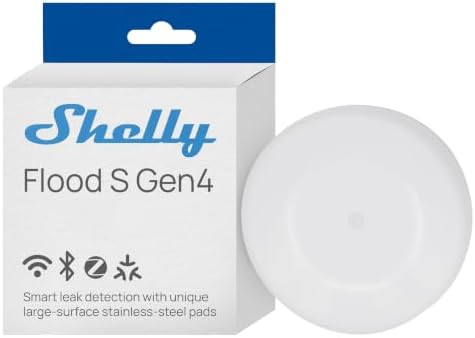
Shelly Flood S Gen4 lists Wi-Fi, Zigbee, Matter, Bluetooth, a local buzzer, stainless contact plates, mobile alerts, and battery operation. Verify whether your chosen setup needs a hub, which notification services are available, and how long the battery specification applies under your signal conditions.

Test before relying on notifications
- Install the app, hub, or local integration required by the exact model.
- Place the sensor and confirm the device is online from that location.
- Use the maker’s test method or a damp cloth on the contacts; do not flood the floor.
- Confirm both the audible alarm and every remote notification you expect.
- Record the test date and repeat monthly and after network changes.
If an alarm sounds, avoid standing water near electrical equipment. Shut off water only when it is safe, disconnect power through an appropriate dry control if required, and call a qualified professional for an unknown or concealed source.
Bottom line
Buy enough sensors for the highest-risk points, not just one for the whole home. Good placement, a verified alert path, and regular testing matter more than a long feature list.