
Manufactured home kitchen humidity usually rises while you boil, simmer, wash dishes, or run a dishwasher. The useful question is not whether the number moved, but whether it returns toward the home’s normal baseline after the moisture source stops and the kitchen exhaust has had time to work. A short, consistent log can separate a cooking event from a ventilation, leak, or whole-home moisture problem.
Transparency: this article includes an Amazon product card generated by the site’s WordPress affiliate block. If you buy through it, we may receive a commission at no extra cost to you.
The monitor below is a practical way to compare the kitchen with another room. It does not diagnose mold, prove that a surface is dry, or replace an inspection. Confirm the current seller, quantity, specifications, and delivery details on the live product card; no price is shown here.
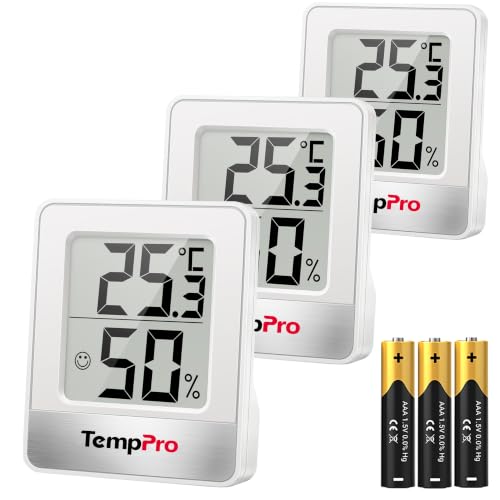
- Para un clima interior saludable: Con este mini termohigrómetro de ambiente, puede conocer fácilmente la temperatura y h…
- Sensor avanzado de alta precisión: El termómetro higrómetro para hogar construido en un sensor de temperatura y humedad …
- Ahorro de energía y opciones de montaje múltiple: Este monitor de temperatura y humedad en el hogar funciona con 1 bater…
Start with the pattern, not one humidity reading
Place one monitor in the kitchen away from the stove, sink, window, supply register, and direct exhaust airflow. Put a second in a central living area. Record both readings before cooking, near the end of cooking, and again 30 and 60 minutes later. Use the same locations and roughly the same routine for several days. The absolute numbers matter less than the repeated relationship between rooms and the recovery time.
If both rooms stay elevated, widen the investigation. The kitchen may only be where the condition is easiest to notice. Compare the pattern with our guide to manufactured-home humidity after rain and, if laundry is nearby, the separate laundry-room humidity checklist.
Check whether the exhaust actually reaches outdoors
Turn on the range hood before steam builds and leave it running after cooking. A hood that only recirculates air through a filter may catch grease but does not remove water vapor outdoors. Confirm the duct route, exterior termination, damper movement, and filter condition. Do not assume a loud fan is moving enough air.
The U.S. Environmental Protection Agency recommends using kitchen and bathroom exhaust fans and venting moisture-producing appliances to the outdoors. U.S. Department of Energy research on manufactured housing likewise treats source control, air sealing, and ventilation as connected parts of moisture management, not interchangeable fixes.

Inspect the four common hidden sources
- Sink and supply lines: dry the cabinet, then check joints, shutoff valves, drain fittings, and the cabinet floor after use.
- Dishwasher: look for moisture at the toe kick, hose connections, door seal, and the adjacent cabinet after a full cycle.
- Range hood duct: check for a disconnected, crushed, or poorly terminated duct where safely accessible.
- Exterior and under-home pathways: after rain, inspect roof penetrations, wall joints, plumbing openings, skirting, and the crawl space rather than blaming cooking alone.
Do not open energized equipment or enter a wet electrical area. Persistent leaks, soft flooring, damaged wallboard, staining, or a recurring musty odor justify professional evaluation.
Use a controlled cooking test
Choose two similar cooking sessions. During the first, run the hood from start to finish, use pot lids, and keep the kitchen door arrangement consistent. During the second, change only one variable, such as hood duration. Record weather and the two-room readings. This is not a laboratory test, but it is more informative than comparing unrelated days.
For a reusable logging format, follow how to track humidity at home. Avoid chasing every small fluctuation; consumer meters have tolerances, and placement can change the reading.
What not to do
- Do not place the sensor directly above a boiling pot and treat that as the room average.
- Do not run a portable dehumidifier while ignoring an active plumbing or roof leak.
- Do not block required vents or alter combustion-air pathways.
- Do not paint over staining before the moisture source is identified and corrected.
- Do not assume a recirculating hood removes water vapor outdoors.
Frequently asked questions
How fast should kitchen humidity fall after cooking?
There is no universal minute-by-minute target because outdoor conditions, home volume, ventilation, and the cooking load differ. Look for a repeatable return toward the home’s baseline rather than a single cutoff.
Does opening a window solve the problem?
It may help when outdoor air is drier and conditions are safe, but it can add moisture when outdoor air is humid. Source exhaust to outdoors is more predictable.
Can a hygrometer detect mold?
No. It measures local temperature and relative humidity. It cannot identify hidden wet materials or determine whether microbial growth is present.
When should I call a professional?
Get help for an active leak, damaged materials, repeated condensation, persistent odor, electrical risk, or a moisture pattern that continues despite normal source control.
Sources and conclusion
For broader guidance, see the EPA indoor-air guide, the HUD USER manufactured-housing moisture resource, and the Department of Energy manufactured-housing report. The practical sequence is simple: measure a pattern, verify exhaust, inspect likely sources, change one variable, and repair the cause rather than hiding the symptom.