
A shower squeegee can remove water from smooth glass and wall panels after use, but it is not a cure for high indoor humidity, failed caulk, or a plumbing leak. In a manufactured-home bathroom, choose it by blade width, surface compatibility, grip, storage location, and door clearance. The best tool is one you can use without leaning across a wet floor or striking a lightweight enclosure.
Transparency: this article contains one affiliate product card. The site may earn a commission from a qualifying purchase at no extra cost to you.
What a squeegee can and cannot do
A clean flexible blade can move beads of water toward the shower pan, reducing what remains on glass or a smooth surround. It does not replace ventilation, drying time, or repair. If condensation appears beyond the shower, start with our guide to bathroom condensation in a manufactured home.
Do not use a hard edge on acrylic, textured panels, damaged coatings, loose trim, or a surface whose manufacturer prohibits it. Test a hidden corner with light pressure. Stop if the blade chatters, catches, or leaves marks.
Measure before choosing
Blade width
A wide blade covers glass quickly but may not fit between handles, tracks, shelves, or curved corners. Measure the narrowest usable path. A compact blade is slower on a large panel but easier to control in a small bath.
Handle and reach
Choose a handle you can hold with a neutral wrist while standing safely. Do not climb on the shower curb or stretch over a tub. A heavy metal handle can chip a lightweight pan or glass if dropped; a soft body may be safer where space is tight.
Storage point
Confirm that a hook or hanger will not collide with a sliding door, scratch a frame, cover a vent, or fall into the pan. Adhesive mounts need a clean compatible surface and should not be treated as structural fasteners.
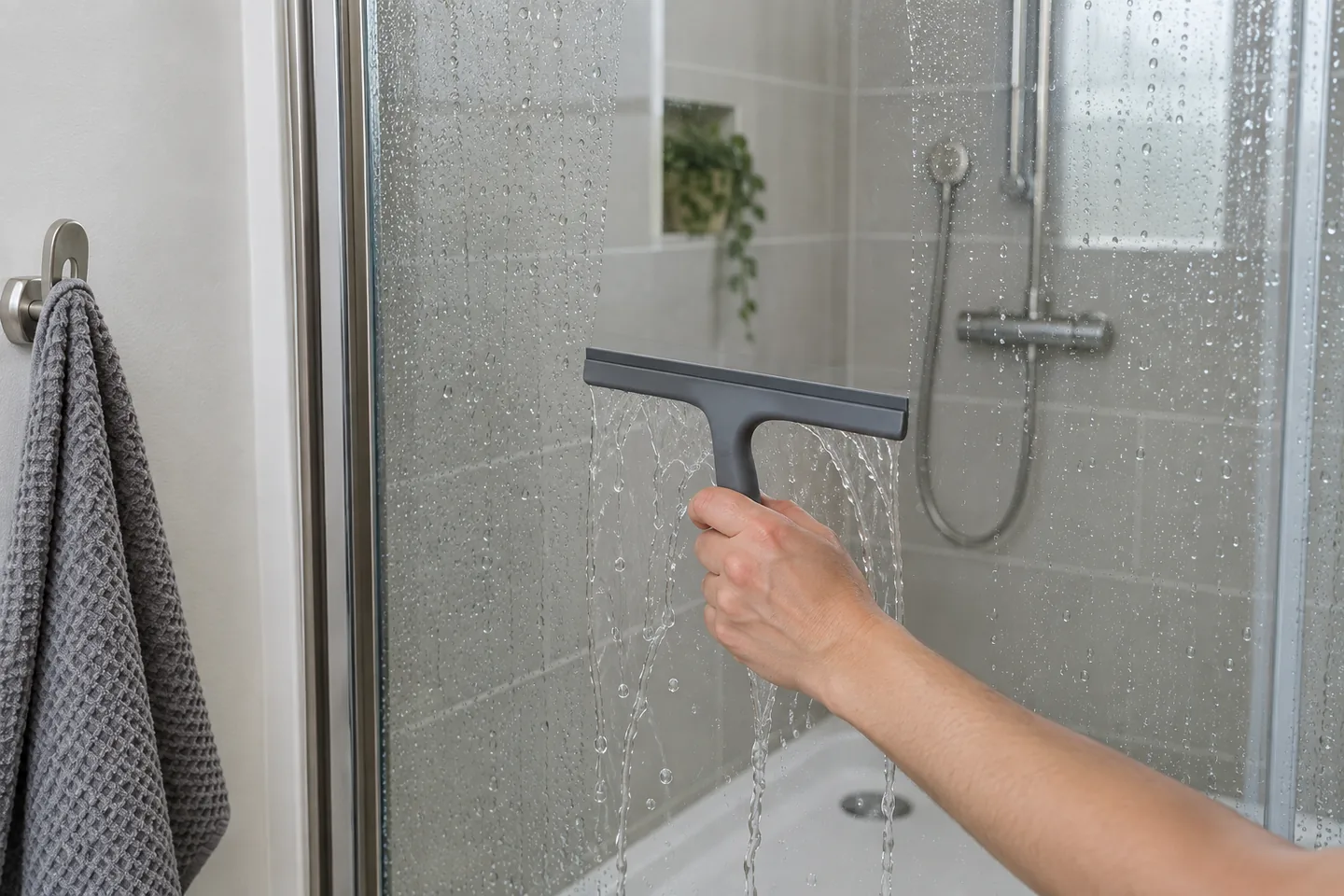
Example of a compact hanging squeegee
The current product card below is a catalog example with a listed 25 cm blade and hanging hook. Verify the live dimensions, material, mounting method, cleaning directions, and suitability for your shower surface before buying.

A safe after-shower routine
- Rinse loose soap from the surface while following the enclosure maker’s care instructions.
- Stand on the stable floor, not the curb, and keep the exit clear.
- Pull the blade in overlapping downward passes with light pressure.
- Direct water into the pan, away from wall joints and the bathroom floor.
- Rinse the blade, shake it over the pan, and hang it where air can circulate.
- Run the exhaust fan or open approved ventilation as appropriate.
Never mix cleaners or spray chemicals in a poorly ventilated room. Keep tools and cleaners away from children and pets. If water reaches a receptacle, light, or fan, stop and address the electrical hazard rather than continuing cleanup.
Cleaning and moisture checks
Wash the blade as directed and remove hair or grit that could scratch. Replace a blade that hardens, splits, or develops a rough edge. Periodically inspect caulk, tracks, corners, and the floor outside the enclosure. A water leak detector can provide early warning in selected locations, but it does not replace inspection.
If humidity remains high long after bathing, track the pattern rather than assuming the squeegee failed. Our guide to tracking indoor humidity explains how to read timing and location.
Frequently asked questions
Can I use it on acrylic?
Only if the enclosure manufacturer allows it. Use a clean soft blade, test first, and stop at any sign of scratching.
Does it prevent mold?
No single tool can promise that. It removes surface water; ventilation, leak repair, cleaning, and material condition still matter.
Should I squeegee the floor?
Only if the shower-pan manufacturer permits it and you can work without slipping. Never push water over the threshold.
Bottom line
Choose a squeegee that fits the actual panels and can be stored clear of the door. Use light downward passes from a stable position, clean the blade, and treat persistent moisture as a ventilation or repair question.
Sources: U.S. EPA moisture guidance and Bob Vila shower-squeegee selection criteria.