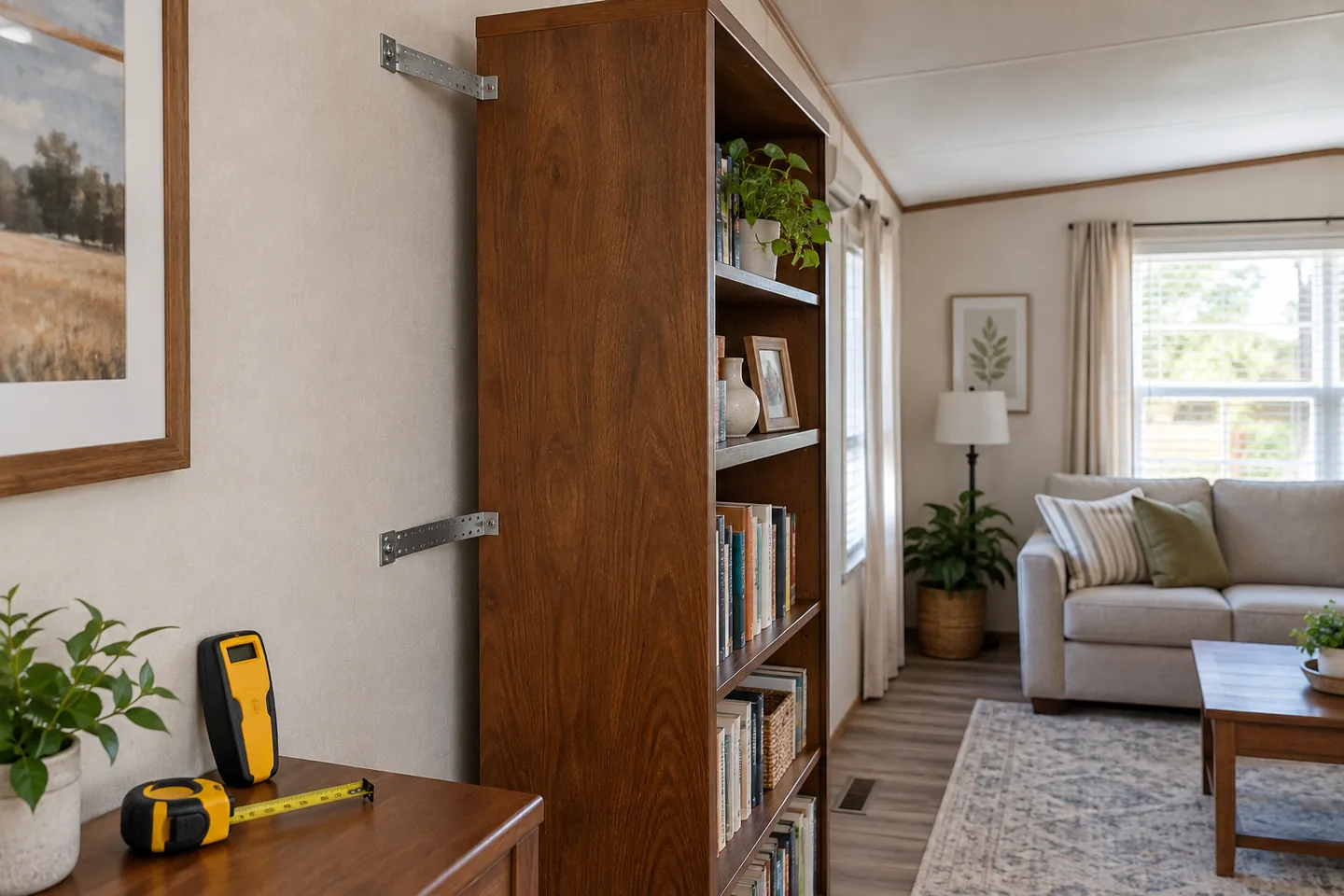
Furniture anti-tip straps can reduce a serious household hazard, but only when the furniture connection, wall connection, fasteners, and substrate all match. In a manufactured home, do not assume a hollow-wall anchor or an adhesive pad is suitable just because it came in the box. Locate structural framing, follow both manufacturers’ instructions, and hire a qualified installer when the wall construction is uncertain.
Transparency: this article contains an affiliate product card. If you buy through it, the site may earn a commission at no extra cost to you.
In this furniture anti-tip straps guide
Furniture anti-tip straps are a safety system
A strap is only one part of the load path. The furniture bracket, strap, wall bracket, screws, and wall structure must work together. The U.S. Consumer Product Safety Commission advises anchoring dressers, bookcases, televisions, and other furniture that could tip. It also recommends keeping tempting objects away from the top and placing heavier items on lower shelves.
Start with the instructions supplied with the furniture. Some units include a designated anchoring point; others require the manufacturer’s specific kit. A generic kit should not replace missing structural parts or repair damaged particleboard. For another water-related safety check around cabinets, see our guide to water leak detector placement.
Check the manufactured-home wall before drilling
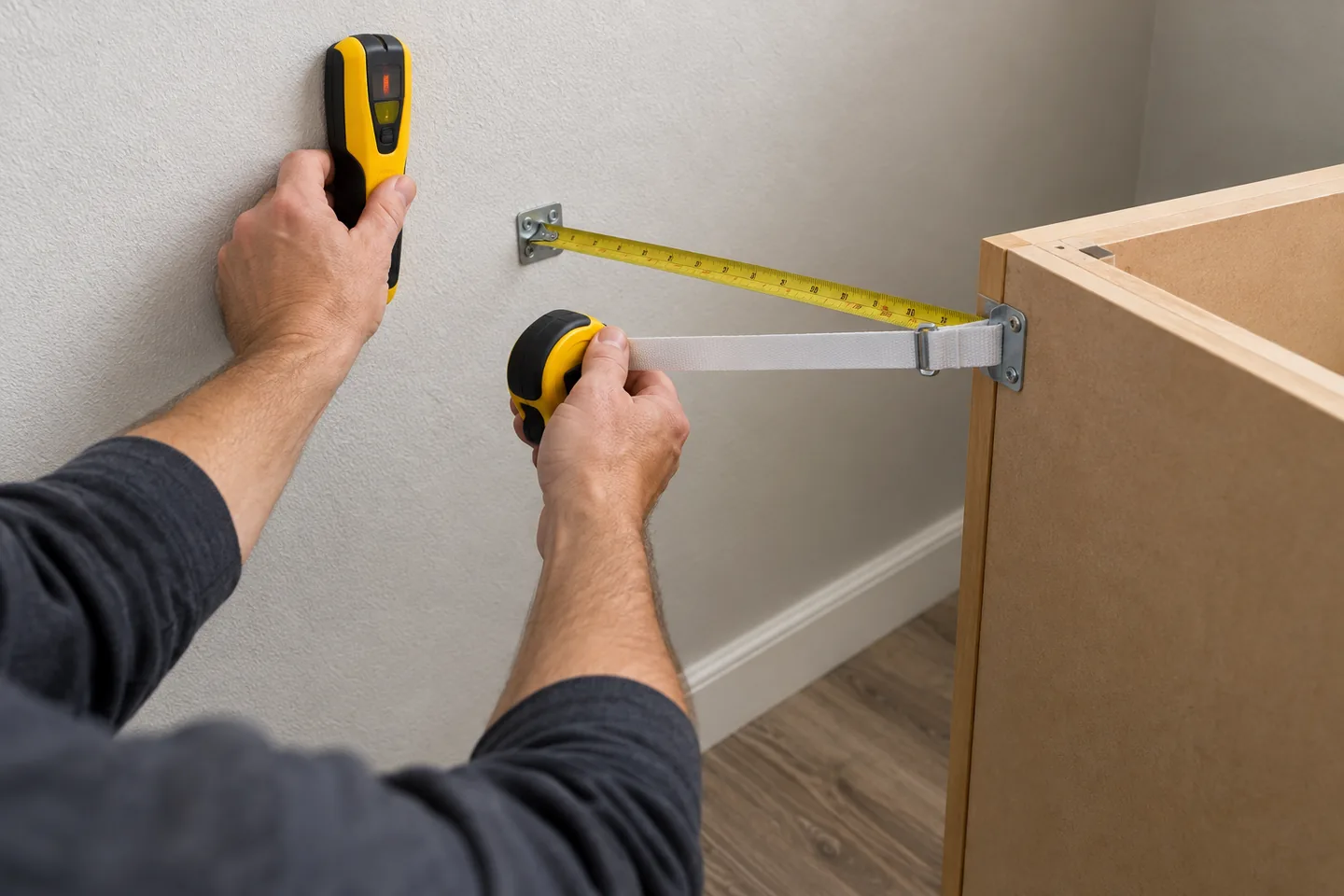
Wall finishes and framing can vary by home, room, and remodel. Use a reliable method to identify framing and check for hidden wiring, plumbing, or gas lines. Do not treat thin paneling or gypsum board alone as a structural anchor point unless a qualified specification explicitly permits the selected fastener and load.
- Locate structure: confirm a stud or other approved backing, not just a visual seam.
- Check the furniture: use solid framing or the attachment point named by its maker.
- Leave service access: route straps so they do not pinch cords, vents, or plumbing.
- Keep an exit path: anchoring must not narrow a doorway or block emergency access.
A metal-strap catalog example
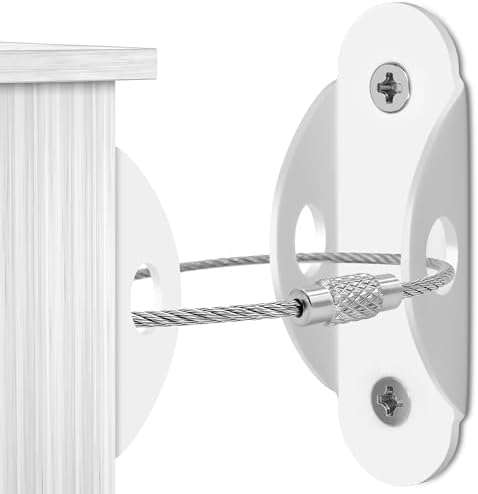
The card below is a ten-pack described by its listing as stainless-steel anti-tip furniture straps. Treat that wording as product information to verify, not an independent strength test. Confirm the included fasteners, installation instructions, compatible substrates, recall status, and condition before use.
Seven checks before choosing a kit
- Furniture type: identify whether you are securing a dresser, shelf, cabinet, or television.
- Attachment point: avoid cracked, swollen, or unsupported panels.
- Wall substrate: match fasteners to confirmed framing and wall construction.
- Strap material: inspect webbing, cable, or metal links for damage and corrosion.
- Adjustment range: leave only the service gap allowed by the instructions.
- Release method: understand how the furniture can be moved for cleaning without damaging the anchor.
- Recall check: search the exact brand and model before installation and periodically afterward.
Do not rely on adhesive-only marketing for a life-safety application unless the furniture manufacturer and the kit instructions explicitly approve that configuration. The CPSC reported a 2026 recall of some plastic restraint kits after testing found that components could break or degrade. That does not make every plastic component unsafe, but it makes exact product identification and recall checks essential.
Installation and maintenance
Unload upper shelves before moving furniture. Keep children and pets away from the work area, isolate electrical equipment, and use eye protection when drilling. If you cannot confirm the wall structure or hidden services, stop and use a qualified installer. Once fitted, test only as directed; never climb on or deliberately pull the furniture to “prove” the strap.
Recheck the system after moving the unit, changing its load, remodeling the wall, or noticing loose hardware. Store heavy items low and keep frequently used objects within easy reach. If the furniture sits on a resilient floor, our furniture slider guide for vinyl plank floors explains how to move it without assuming sliders provide tip protection.
Frequently asked questions
Can I anchor only to wallboard?
Do not assume so. Follow the furniture and restraint instructions and identify an approved structural attachment. Wall construction is not identical in every manufactured home.
Are two straps always better than one?
The correct quantity and placement come from the tested instructions. Extra holes or mismatched hardware can weaken a poor attachment.
Do straps make climbing safe?
No. Anchoring is a backup safety measure, not permission to climb or overload furniture.
Practical conclusion
Choose furniture anti-tip straps as a complete, compatible system. Confirm structure on both sides, use the specified fasteners, check recalls, and keep heavy items low. In a manufactured home, uncertainty about framing or concealed services is a reason to pause and call a qualified professional.
Sources: CPSC Anchor It! and the 2026 CPSC restraint-kit recall.