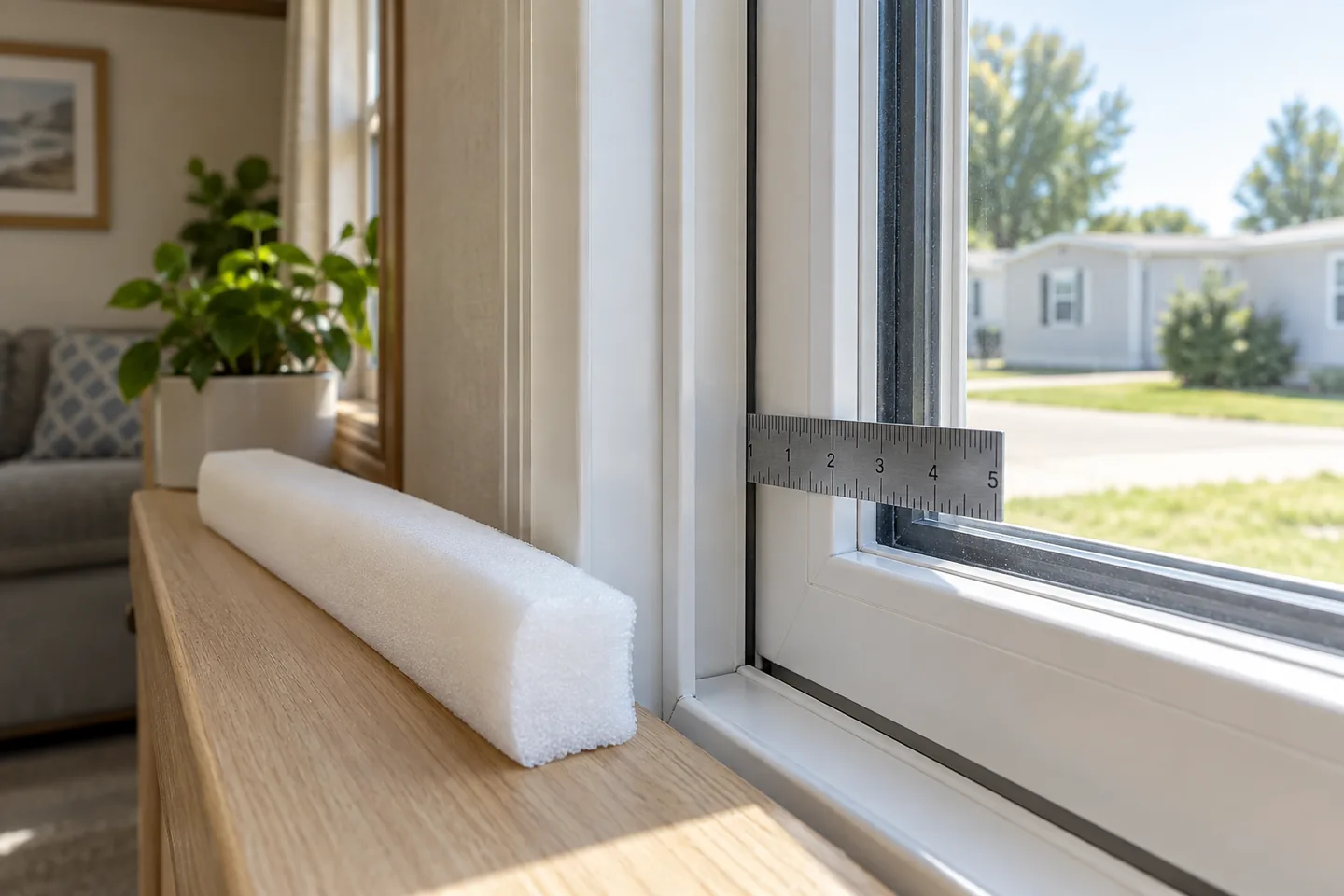
Window weather stripping can reduce a small, confirmed air leak around an operable window, but it cannot repair rot, a failed insulated-glass seal, a warped sash, or water intrusion. In a manufactured home, start by locating the leak and measuring the closing gap. Then choose a profile that compresses without preventing the latch from engaging.
Transparency: this article contains one affiliate product card. The site may earn a commission at no extra cost to you.
In this window weather stripping guide
When window weather stripping is the right fix
On a dry, calm day, close and latch the window. Inspect the meeting rails, sash perimeter, locks, and frame. A thin tissue can help reveal moving air, but keep it away from flames and powered fans. If staining or dampness appears after rain, use our after-rain moisture check before covering the joint.
Weather stripping belongs on a moving contact surface where the sash closes. Exterior cracks, flashing defects, loose frames, and drainage openings require a different repair. Do not block weep holes. If the window is loose, difficult to lock, visibly deformed, or surrounded by soft material, stop and consult the home or window manufacturer or a qualified installer.
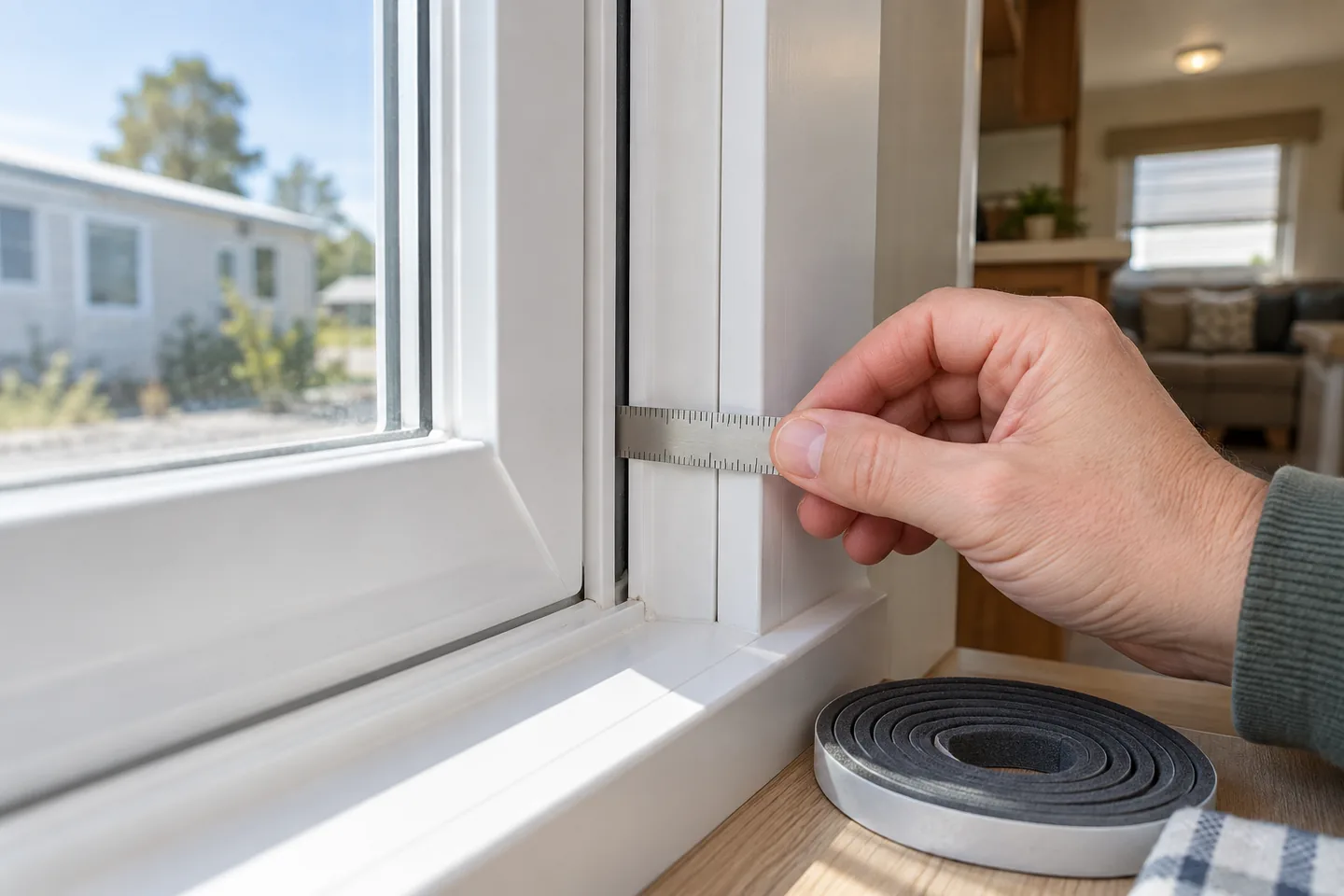
Measure the gap and the contact path
- Clean the frame and identify the exact line where the sash contacts it.
- Measure the gap at the top, center, and bottom; do not assume it is uniform.
- Check available width so the strip does not overlap hardware or drainage paths.
- Record the total perimeter and add a modest allowance for trimming.
- Test a short removable section before applying the full length.
A strip that is too thin will not seal; one that is too thick can bow the sash, overload the latch, or make the window unsafe to operate. The same principle applies to doors, but the profiles are not automatically interchangeable; see our manufactured-home door draft-stopper guide.
Foam, rubber, and compression
Open-cell foam is inexpensive but can absorb moisture and wear quickly. Closed-cell foam resists water better and works for regular, low-movement gaps. EPDM or silicone profiles can provide longer service where the shape and compression range match the window. The label should state the intended gap range; the uncompressed thickness is not the same as the gap it can safely seal.
Example retrieved from the authorized catalog
The listing below describes an adhesive foam strip intended for 1–5 mm gaps. It is from Amazon Spain and uses metric dimensions, so U.S. readers should verify local availability, convert measurements carefully, and confirm material and application instructions before buying. It is an example, not evidence that the strip fits a particular window.

Install a short test section safely
Follow the product instructions for surface temperature and cleaning. Avoid aggressive solvents on vinyl or painted finishes. Cut with scissors on a stable surface, keep blades away from children, and do not stretch the strip during application. Close the sash gently, then verify that it latches normally and can still serve as an emergency opening if applicable.
After 24–48 hours, check adhesion, compression, condensation, and lock operation. Remove the strip if it traps water or deforms the frame. Persistent condensation may reflect indoor humidity rather than an air leak; compare with our condensation-control checklist.
Frequently asked questions
Can weather stripping stop a window leak?
It can reduce air leakage at a closing joint. It should not be used to hide rainwater entry, damaged flashing, failed glazing, or decay.
Should the foam be fully crushed?
No. It needs enough compression to seal while preserving window alignment and latch operation. Follow the stated compression range.
Can I seal every opening around the frame?
No. Keep manufacturer-designed drainage and ventilation paths open.
Window weather stripping: bottom line
For window weather stripping, diagnose first, measure the actual gap, and test the least aggressive compatible profile. A safe result closes and locks normally, stays dry, and remains removable without damaging the window.
Sources: U.S. Department of Energy weatherization job aids and Energy Saver air-sealing guidance for renters.